
In this article, we’ll walk you through exactly what an asset register in schools is, why it’s so important for today’s educational settings, how to choose the right asset tracking system, what kinds of assets to cover, and how a modern digital platform transforms the process of school stocktaking, classroom equipment inventory, school resources audit, and school asset tracking.
Drawing on our experience at InVentry and real-life examples from schools we’ve worked with, this guide is designed to help schools think strategically about their school asset register and how to implement it effectively.
Table of Contents
- What is an Asset Register in Schools?
- Overview & Benefits
- How to Choose a School Asset Register System?
- Assets That Could Be Managed
- Conclusion
- FAQs
We’ve worked alongside schools and trusts for many years at InVentry, and we’ve seen first-hand how easily valuable resources can slip off the radar. Imagine a school that has invested in tablets, interactive whiteboards, science lab equipment, sports kits, mobile devices, and fencing off storage areas – but still relies on spreadsheets, sticky notes, or memory alone to keep track of them. Without a proper asset register for schools, the risk of loss, underuse, duplication, or poor condition rises significantly.
When staff ask, “what is an asset register in schools?”, they’re really asking: how can we know what our school owns, where it is, who is using it, what condition it’s in, and when it will need replacing? That’s the essence of a well-maintained asset register in schools. In this article, we’ll cover how converting a manual list into a digital platform makes a massive difference in terms of control, efficiency, and compliance.
What is an Asset Register in Schools?
Simply put, a school asset register is a detailed, audited list of all the assets a school owns or manages. In schools, it becomes a “source of truth” for everything from classroom computers to lockers, sports equipment, and even catering appliances. It transcends a basic inventory list because it adds the dimension of ongoing asset tracking: location, condition, current usage, maintenance history, and disposal plans.
At schools, this might involve categorising assets (IT, furniture, curriculum aids, sports, facilities), tagging each item (barcode/QR/RFID), recording the date of purchase, cost, expected lifespan or condition, location (site, building, room), user or custodian, and whether it’s reserved or in maintenance. The register becomes the backbone for school stocktaking, classroom equipment inventory, and school asset tracking initiatives.
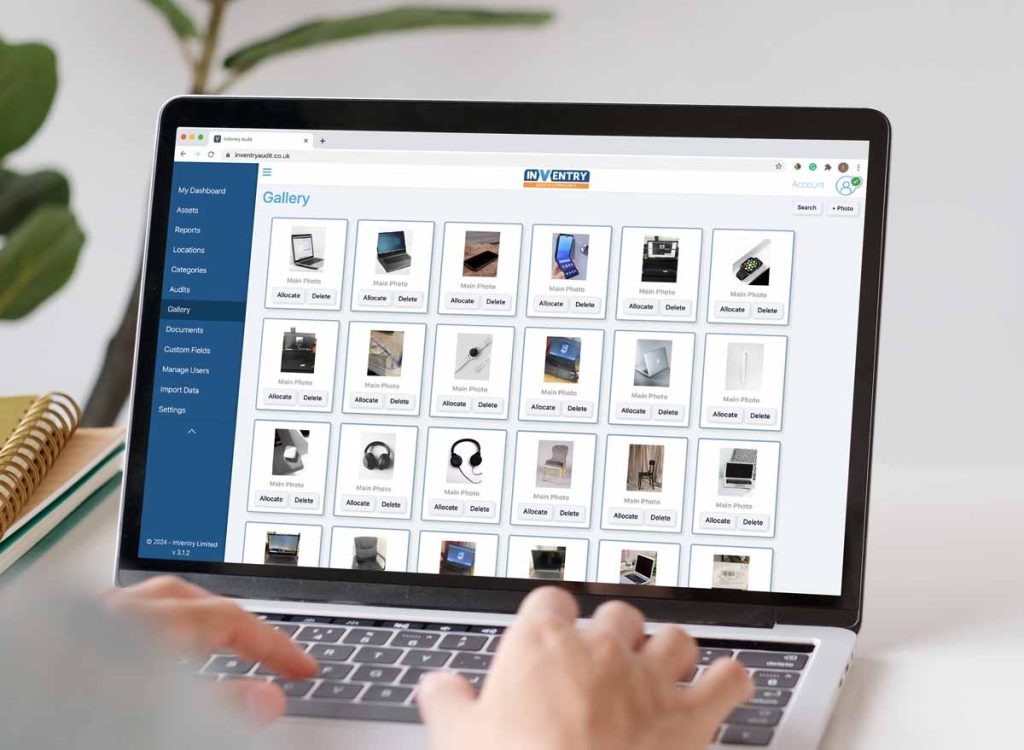
To illustrate with our asset tracking for schools platform: InVentry’s Asset Management System allows schools to log, audit, and report on physical assets from a central platform, including scanning via QR/barcode and managing bookings.
A key advantage of framing it this way is that when schools ask, “what is an asset register in schools?”, the answer leads to understanding that it is the linchpin that allows them to know what they own, manage how they use it, and plan what comes next.
Overview & Benefits
Enhanced Visibility and Control
One of the most immediate benefits of a school asset register is enhanced visibility. When we’ve worked with schools, we often find that assets reside in various storage areas, classrooms, labs, or even off-site – they are not all covered by one system. With a digital register, schools create transparency: they know what assets exist, where they’re located, who is responsible for them, and their condition. That means fewer surprises – lost equipment, duplication, or misallocation.
In the case of Oastlers School (Bradford), staff told us they needed “a simple and accurate way of tracking on-site assets… from laptops and iPads right through to keys”. The InVentry Audit & Compliance software allowed them to compile an accurate list of assets, store owner information and location, and receive reminders when warranties were due to expire. Once installed, they were thrilled and told us:
“We couldn’t be happier and would recommend the software to anyone, we couldn’t live without it now.”
Savings, Efficiency & Better Utilisation
School budgets are often stretched. An up-to-date asset register empowers schools to avoid unnecessary spend, spot underutilised resources, and extend the lifecycle of assets. By keeping track of condition and usage, schools can shift from reactive (“broken laptop – must buy new”) to proactive (“this laptop has two years left, and we’ll plan budget accordingly”).
When schools know how many cameras or projectors they truly have, they’re less likely to buy duplicates. When they know the condition, they can prioritise replacements strategically. Research highlights back this up and show that asset-management systems in schools help reduce costs and improve financial planning:
“Overall, asset management allows the school to run more efficiently and provide a higher level of service to the students as teachers have more insight into which of the assets are available for teaching”
Audit Readiness, Compliance & Risk Mitigation
A school asset register is not just internal housekeeping – it plays a key role in governance, statutory compliance, and inspection readiness. Schools must ensure their fixed assets are recorded appropriately, depreciation is managed, and that they are ready for audits or inspections. As backed up by the advice by the Key Support, a digital system strengthens this.
For instance, with our platform, schools can generate audit-trail reports, log maintenance and disposals, and show location history. From a policy perspective, having this register supports better risk management (for example, damaged lab equipment or missing sports gear) and helps with insurance claims.
Maintenance, Safety & Condition Monitoring
When schools include equipment condition and maintenance history in their register, it becomes a proactive tool for safety and serviceability. Lab equipment or sports fencing may need routine inspection; smartboards and tablets require upkeep; furniture may become unsafe over time. A school inventory system combined with asset register capability ensures nothing slips through the cracks.
Strategic Planning, Utilisation & Booking
Tracking assets alone is one thing; using them intelligently is another. A well-maintained register can uncover usage patterns: which classroom equipment sits idle, which items are repeatedly booked, and where investment is needed. By enabling booking or reservation features (as InVentry’s system does), schools turn the register into a resource-management tool.
For example, at The Oldershaw School, the Pre-Booking feature allowed staff to book laptops or cameras, reducing reliance on spreadsheets, with Keith Hallam telling us:
“The Pre-Booking feature has completely minimised the time it takes to book assets out”
Multi-site Scalability & Future-proofing
For schools that are part of multi-academy trusts or operate across multiple sites, a centralised school asset register is indispensable. Cloud-based platforms provide consistent data across sites, easy transfers of assets, and seamless reporting. InVentry’s system emphasises scalability and integration for schools with multiple campuses.
How to Choose a School Asset Register System?
Choosing the right system requires careful planning. Schools should identify what types of assets they need to manage, how many sites are involved, who will use the system, and what reporting requirements exist.
Usability is key. Systems should be intuitive for all staff, including administrative teams, teachers, and IT personnel. Mobile access and barcode or QR scanning simplify data entry and maintenance. Integration with existing school MIS, HR, or procurement platforms can further streamline processes.
Data accuracy, audit readiness, and reporting are also essential. The system must allow easy import of existing data, provide robust maintenance and disposal logging, and offer comprehensive reporting for audits. Support and training from the vendor make a significant difference in adoption.
Finally, schools should weigh the cost against the potential value. While budgets matter, the benefits of improved control, efficiency, and compliance often outweigh initial investments. Security and compliance should not be overlooked, especially when tracking devices that may contain sensitive data.
Assets That Could Be Managed
A school asset register can cover a wide range of resources:
- IT and AV equipment: laptops, tablets, projectors, smartboards, printers, networking devices.
- Furniture and fixtures: desks, chairs, tables, storage units.
- Educational and specialist resources: textbooks, lab equipment, musical instruments, teaching aids, sports equipment.
- Facilities-related assets: security systems, playground equipment, catering appliances.
- Shared or booking assets: cameras, laptops, projectors, sports kits.
- Consumables and inventory items: high-value consumables like tablets or chargers can also be tracked.
Digital solutions make it easier to manage all these categories while supporting school stocktaking, classroom equipment inventory, and school asset tracking efficiently.
Conclusion
A school asset register is far more than a list of items. It is a strategic tool that enables schools to track, maintain, and optimise all their resources. From IT equipment and furniture to specialist teaching materials and sports gear, a robust asset register improves visibility, efficiency, compliance, and resource planning.
From our perspective at InVentry, we’ve seen schools transform their resource management by adopting a digital asset register for schools. It provides visibility, booking functionality, multi-site scalability, and compliance features, ensuring schools are fully equipped to manage their assets effectively.
Contact our team today to learn more about our school asset management system or to book a demo to see it in action.
Asset Register For Schools FAQs
1. What should be included in a school asset register?
A school asset register should include every detail needed to identify, track, and manage each asset throughout its lifecycle. At a minimum, this includes a unique asset ID, description, purchase date, cost, location, condition, assigned user or department, and maintenance history.
In practice, schools also benefit from recording additional information such as warranty expiry dates, disposal records, and usage logs. From our experience working with schools, the most effective registers are the ones that go beyond simple inventory lists and act as a full lifecycle tracking system for every asset.
2. Do all schools need an asset register?
Yes, all schools and multi-academy trusts are expected to maintain an accurate asset register as part of good financial governance and compliance.
In real-world school environments, this is essential for audit readiness, budget planning, and safeguarding resources. Whether managed manually or through a digital system, schools must be able to demonstrate what assets they own, where they are, and how they are being used. Increasingly, schools are moving to digital systems to meet these expectations more efficiently and accurately.
3. Can a spreadsheet be used as a school asset register?
A spreadsheet can be used as a basic starting point, but it is not ideal for long-term asset management in schools.
From our experience supporting schools, spreadsheets often lead to issues such as outdated records, duplication errors, and limited visibility across departments or sites. They also lack real-time updates, audit trails, and mobile scanning capabilities.
Digital asset register systems, like those used within InVentry’s Asset Management platform, offer far greater accuracy, automation, and scalability, especially for schools managing large volumes of equipment across multiple locations.
4. How often should schools carry out asset audits?
Most schools should carry out a full asset audit at least once per year, although high-value or frequently used items may require more regular checks.
In practice, schools often align audits with financial year-end processes or termly reviews. Regular auditing ensures the asset register remains accurate, supports insurance requirements, and helps identify missing, damaged, or underused equipment before it becomes a larger issue.
5. How does booking functionality improve asset management in schools?
Booking functionality allows staff to reserve and track shared equipment such as laptops, cameras, or sports kits directly within the asset system.
In real school environments, this prevents double bookings, reduces confusion, and improves visibility of resource usage. Staff can see availability in real time, book assets in advance, and ensure equipment is returned and accounted for properly. Systems like InVentry’s asset tracking tools also help schools understand which resources are heavily used and which are underutilised.
6. What are the most common mistakes schools make with asset registers?
The most common mistakes include failing to keep records updated, relying too heavily on spreadsheets, not tagging assets properly, and using multiple disconnected systems.
From our experience working with schools, one of the biggest challenges is inconsistency in updating records when equipment is moved, replaced, or disposed of. This leads to inaccurate data and gaps during audits. Schools that move to a centralised digital asset register significantly reduce these risks and improve overall control and visibility.
7. Why is a digital asset register better for schools?
A digital asset register provides real-time tracking, improved accuracy, and easier reporting compared to manual systems.
In practice, schools benefit from barcode or QR scanning, automated updates, maintenance tracking, and centralised data access across multiple sites. This makes it much easier to manage large volumes of equipment and ensures schools always have an up-to-date picture of their assets, which is essential for compliance and financial planning.